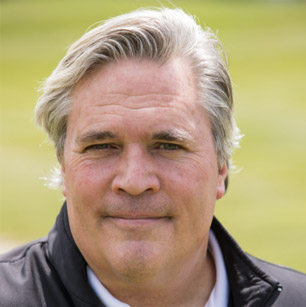
by Andy Mulvihill, NJPI Board Chairman
How would you feel if you joined a union and paid $1,400 in dues each and every year, and the union’s president decided to run for governor and used $47 million of your and your fellow teachers’ dues without asking you? And then came in fifth place in the primary? Well, that’s what the NJEA’s president, Sean Spiller, did.
How would you feel if $10 million of the $47 million was sent to a little-known firm, AP Consulting, for canvassing operations? No one spends that kind of money on canvassing in a primary. It raises legitimate questions about who authorized those payments, what services were provided, and why such an extraordinary sum was routed through a firm with limited publicly known political field experience.
Did you know that teachers can voluntarily give to a teachers’ PAC (political action committee) that spends money on politics and candidates? Last year that PAC raised less than $1 million, and most teachers think the money spent on Spiller’s campaign came from those voluntary donations. Spiller spent $47 million, not $1 million. Why might they be confused when it wasn’t disclosed to them that $47 million of their dues were routed through another organization or two before they hit Spiller’s campaign chest, all in an effort, it seems, to hide these actions?
Five months ago, a series of legal and regulatory actions were filed raising serious questions about how New Jersey teachers’ union dues were used to bankroll Sean Spiller’s failed run for governor.
Five months later, New Jersey educators are still waiting for answers and reform.
A new report by the Sunlight Policy Center of New Jersey — “A Final Analysis of Sean Spiller’s $45 Million Run for Governor: Non-Disclosure, Questionable Spending, and No Accountability” — lays out in detail what many teachers already suspected: $45 million in union dues was funneled into a campaign that finished in fifth place, with limited transparency and no meaningful internal accountability.
The Sunlight Policy Center is a government transparency watchdog focused on political spending and public accountability. Its report draws from official state and federal filings to reconstruct how the money flowed and where it went.
The numbers are staggering.
According to the report, nearly $45 million of teacher dues flowed through NJEA-controlled political entities to support Spiller’s candidacy. The result was 89,472 votes — about 10.6 percent of the Democratic primary electorate — at a cost of roughly $502 per vote.
That is not just a political loss. It is a fiduciary failure.
By comparison, another candidate in the race raised the vast majority of his own funds and spent under $8 million total, earning nearly twice as many votes at a fraction of the cost per vote. The contrast is stark.
But the core issue here is not electoral strategy. It is accountability.
The Sunlight Policy Center report documents more than $10 million sent to a little-known firm, AP Consulting, for canvassing operations. It raises legitimate questions about who authorized those payments, what services were provided, and why such an extraordinary sum was routed through a firm with limited publicly known political field experience.
It also notes that much of the NJEA’s senior leadership during the Spiller campaign remains in place today.
When teachers have their dues automatically deducted from their paychecks, they deserve to know those funds are being used responsibly and transparently.
That is why teachers, supported by the Fairness Center, filed lawsuits challenging how their dues were used and whether proper consent was obtained. It is also why the New Jersey Policy Institute, on whose board I serve as chairman, filed complaints with the IRS and the New Jersey Election Law Enforcement Commission seeking clarity on whether political spending and disclosure requirements were properly followed.
These actions were not partisan. They were about transparency and fiduciary responsibility.
Yet nearly five months later, NJEA leadership has not provided a comprehensive accounting to its members. There has been no detailed explanation of how $45 million was authorized, who approved specific expenditures, what oversight mechanisms were in place, or whether internal conflict-of-interest policies were properly observed.
Instead, members were told the campaign was a “strong showing.”
If everything was handled appropriately, transparency should not be difficult.
Release the internal decision-making records.
Explain the vendor payments.
Disclose compensation tied to the Super PAC operations.
Provide teachers with a clear and complete accounting of how their money was spent.
This moment is larger than one campaign. It is about governance. It is about fiduciary duty. It is about whether member-funded organizations treat dues as a trust — or as a political slush fund.
Transparency is not anti-union. Accountability is not anti-teacher. In fact, they are the protections that ensure members can have confidence in their leadership.
Five months have passed.
Teachers deserve answers.